Oct 18, 2011

Our Son's Smile

Our Son's Smile
(c) Rabbi Menachem Creditor

Gilad_Schalit_h_1331634cl-3.jpg

So many of us spent all night watching live newsfeed broadcast from Israel. 14 hours later my heart is still breaking, and I wonder: What does 1,941 days in the dark feel like?  How is it possible that Gilad Shalit emerged from 5 and a half years of extreme isolation with the ability to stand, to smile? And during the very holiday on which we shake a leafy surrogate for our very beings in a vulnerable exposed home? That smile... my heart won't stop trembling.

This morning, driving my child to school, I said to her, "This is a good day for Am Yisrael (the Jewish People)."  Without missing a beat, my child said, "Abbah, I don't want to sing that son right now." And I laughed. And she laughed.  That's what a child and parent are meant to experience together. Laughter. (And song.) And today is a good day for Am Yisrael. We have our boy back. 

There is scarcely a chance we'll be able to express with words what our People's collective aching and relieved heart is feeling. Upon seeing these images, these videos, reading these stories, how many remembered images from Jewish history resurface, forcing themselves into our mind's eye despite overwhelming gratitude? How can a Jew express to anyone else what seeing our emaciated 25-year old son embraced by his father means to our People's scarred and resilient soul? 

What a day, 
what a beautiful, complicated, flowing day. 
What a precious smile. 
What a holy embrace 
from a father and mother.
What a miracle, 
to have our son back.
We missed him so terribly.
And now we have him home.
Safe.

How can we possibly express the primal ache of this moment for the Jewish People?  Many recited, upon Gilad Shalit's release, a specially composed prayer by the Masorti Movement, one of whose communities in Israel is the Shalit Family's shul.  We davened these words:

...on this great and holy day, the season of our rejoicing, we raise our hearts to God in heaven in joy, happiness, trembling and thanksgiving for the great kindness that You have shown Gilad the son of Aviva and Noam Shalit that You have restored him safely from his place of capture to his family, his country and his people.

On this day, this incredible, trembling and joyous day, it's sinking in. Our son is home. Our People is unified, if but for an instant. We are a family. Some might disagree about the cost, but not about the miracle of our son's smile. 

---
Rabbi Menachem Creditor
Congregation Netivot Shalom  || Bay Area Masorti ||  ShefaNetwork 
Rabbis for Women of the Wall  ||  menachemcreditor.org 
To join Rabbi Creditor's email list, send a blank email to thetisch-subscribe@yahoogroups.com.

Gilad is Home!

Oct 16, 2011

Hirsh Goodman in Jpost.com: "It’s not about price"


---
Rabbi Menachem Creditor
Congregation Netivot Shalom  || Bay Area Masorti ||  ShefaNetwork 
Rabbis for Women of the Wall  ||  menachemcreditor.org 
To join Rabbi Creditor's email list, send a blank email to thetisch-subscribe@yahoogroups.com.

Wonderful
(C) Rabbi Menachem Creditor

With every laugh,
every twinkle of her eye,
every leap from slide to sand,
it becomes clear that time is
on the march.

The effort of pausing to store each instant
is a distraction from the next.

This excruciating combination of
wonder at every leap and
heartache for every lived (and lost) moment
might be rife with mourning,
but it is also wonderful.

Oct 11, 2011

Bringing Gilad Home!


Oct 10, 2011

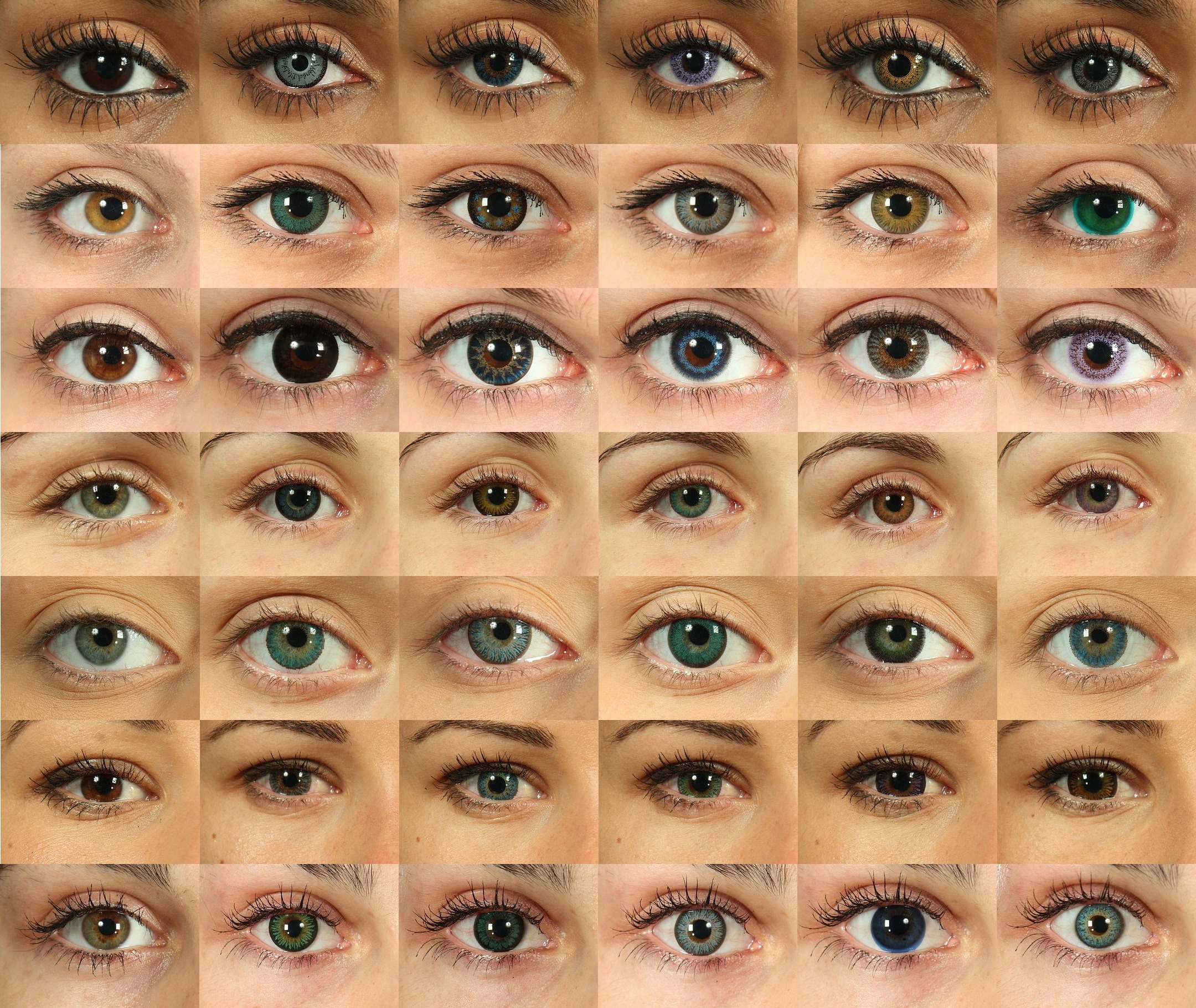
The Eyes Have It

The Eyes Have It
© 2011, Rabbi Menachem Creditor

Beyond the physical process of observation there is the experience of 'seeing.'

This thing called seeing includes, among many things, perceiving, knowing, understanding, and interpreting. Stephen Covey's teaching is therefore essential: 'Two people can see the same thing, disagree, and yet both be right. It's not logical; it's psychological.'

One thing can be seen in as many ways as there are observers. Not only must we ask how can "the truth" of any experience be communicated to someone who wasn't there; we must pause to consider whether fellow observers can communicate even with each other, given their inherently different impressions of the shared happening? And it is urgent that the world considers these questions, as politicians and political forces increasingly claim clarity, and castigate "others" who don't see the "obvious truth." As Paul McCartney and John Lennon put it in 1968:

"Try to see it my way / Only time will tell if I am right or I am wrong. / While you see it your way, there's a chance that we might fall apart before too long."

"Before too long" feels frighteningly soon. There is a difference between varying visions of the world and power-seeking human beings with competing absolute-truth-claims. The former is akin to the ancient rabbinic teaching that at Mount Sinai everyone heard a different voice of God, and the latter is a tragic misperception of the universe, one which easily gives way to physical violence.

We must try to imagine the world through someone else's eyes. But is that even a possibility?

The first step towards sharing varying experiences of the world is the acknowledgement that your eyes are different from everyone else's. The truth as you experience it is no less true that someone else's. Some label this approach relativism, typically used as a discrediting term. But even "relativism" means many things, including the helpful concept that truth is always relative to some frame of reference. My very make-up, both physical (my eyes) and meta-physical (my heritage), determines what and how I see.

But looking straight into someone's eyes transcends particular frames of reference.  Eyes are beyond language, beyond culture.  As Emanuel Levinas wrote: "..those eyes, which are absolutely without protection, the most naked part of the human body, none the less offer an absolute resistance to possession…" It is precisely the eye's nakedness that causes meeting another's gaze to be such an intense and inescapable moment of communication, beyond what even the best-chosen words can communicate. As Norma Desmond, the silent-film star in Andrew Lloyd Webber's musical "Sunset Boulevard" pours out:

"No words can tell the stories my eyes tell / Watch me when I frown, you can't write that down / You know I'm right, it's there in black and white / When I look your way, you'll hear what I say."

We glimpse, through the eyes of another human being, their soul. And we are forced to stop. For in catching a glimpse of another's soul one ultimately recognizes not their own soul, but rather an inherently kindred (yet, vitally, differentiated) reflection of the Divine Image. I see not myself in your eyes, not even you, but rather the possibility – the reminder! – that I and you are only two fragments of the Truth. When I am exposed to the Raw Source of It All, how can I but see that there is more to the universe than my sense of rightness?

I am so afraid when someone looks into my eyes. They see me. The only way to protect my vulnerable self is to hide from the world the Divine within me by closing my eyes. But I'd rather take the chance of seeing and sharing with someone else something beautiful, something unpredictable and grander than what I can imagine with my eyes closed.


---
Rabbi Menachem Creditor
Congregation Netivot Shalom  || Bay Area Masorti ||  ShefaNetwork 
Rabbis for Women of the Wall  ||  menachemcreditor.org 
To join Rabbi Creditor's email list, send a blank email to thetisch-subscribe@yahoogroups.com.

Total Pageviews